We include environmental disposal as a standard part of our cash for cars process in and around Wickatunk, New Jersey. We remove or contain regulated components such as batteries and fluids, and we deliver vehicles to authorized recycling and scrap facilities so hazardous materials are handled according to local practice.
Why environmental disposal matters when you sell a car for cash
Old cars contain several materials that can harm soil, water and local drainage if they are not handled properly. Leaving a leaking vehicle on a driveway or lot can create stains, contaminate storm drains, and draw complaints from neighbors or homeowners associations. For people in Wickatunk and nearby Monmouth County towns, responsible disposal avoids those risks and keeps the vehicle transition clean and permitted.
As a junkyard that buys vehicles in any condition, we factor environmental disposal into how we handle pickups and transfers. That affects how we prepare a vehicle on site, how we transport it, and where the vehicle ends up for recycling or parts salvage.
What we remove and why it matters
When we pick up a vehicle for cash we look at components that are commonly regulated or that affect resale value. Handling these items correctly lowers environmental risk and often affects the cash offer.
- Batteries, because they contain lead and acid and must be recycled.
- Automotive fluids, including engine oil, transmission fluid, brake fluid and coolant, which can contaminate soil and water.
- Fuel, which presents fire and spill risks during towing and storage.
- Airbags and seatbelt pretensioners, which are explosive or hazardous if deployed improperly.
- Refrigerants from air conditioning systems, which require certified recovery to avoid releases.
- Mercury switches or legacy components that may be present in older models.
How the disposal process works, step by step
- Initial assessment. We inspect the vehicle when you request a cash offer to note fluids, battery condition, obvious leaks and salvageable parts. That helps us prepare the right equipment and personnel for pickup.
- On site stabilization. If a vehicle is leaking, we use containment measures and absorbents to limit soil contact during loading. We remove batteries when safe to do so and secure them for recycling.
- Fluid and refrigerant handling. Fuel lines and refrigerant systems are left intact for transport unless removal is required by the receiving facility. Fluids that are drained are placed in approved containers and transported to licensed processing centers.
- Transport to an authorized facility. We deliver the vehicle to facilities that accept scrap, parts salvage and recycled materials so fluids, batteries and electronic components are processed responsibly.
- Record keeping. Where required for local disposal or for estate and fleet accounts, we note what was removed and where the vehicle was delivered.
Pro tip: Removing a dead or corroded battery before pickup can speed processing at the receiving facility and sometimes affects the cash offer, but never attempt battery removal if you are unsure how to do it safely. Ask our team about the safest option for your vehicle.
What you as the seller should prepare
Preparing your car for removal helps the environmental disposal step go smoothly and minimizes site cleanup. You do not need professional training to get ready, but a few simple steps help.
- Move personal items out of the vehicle and indoors so they are not lost during transfer.
- Note recent mechanical problems and any known leaks. That information helps us plan containment and gives you a clear record for the sale.
- Secure loose parts or accessories, such as loose batteries or aftermarket equipment.
- If the vehicle has a heavy leak, clear a small area around the car so our crew can work safely and place absorbent materials if available.
Pickup readiness checklist
- Valid title or paperwork if available, or the information you have about ownership
- Keys to the vehicle or a clear statement that keys are missing
- A cleared area for the tow truck to park and load the vehicle
- Notes about leaks, battery removal, or missing parts
How environmental disposal affects the cash offer
Handling hazardous items takes time and creates processing costs at the recycling facility. When we value a vehicle for cash, we consider the condition of environmental components and the likely recycling route. A vehicle that requires extensive fluid recovery or has a seized engine may net a different offer than a clean, drained vehicle.
That said, we buy vehicles in any condition and include the cost of pickup and safe transport. We explain the offer and how environmental handling factors into the final number before you accept.
Common objections and misunderstandings
Customers often tell us they are worried about paperwork or that they do not have a title. We accept scrap and unwanted cars without a title in many cases, but state rules about transfers and salvage vary. We also get questions about who is responsible for contamination on a property created before pickup. In general, once a vehicle is in our care for transport we handle disposal steps, but existing property contamination may require separate remediation.
For more on paperwork and titles see our page about Title And Paperwork, and for cleanup questions see Site Cleanup After Tow.
Watch out: Abandoning a leaking vehicle or attempting to dispose of fluids yourself can lead to fines from local authorities and create environmental harm. If a vehicle is leaking, let our crew handle containment and transport rather than moving fluids across a driveway or into storm drains.
How we coordinate with recycling channels and local rules
We bring vehicles to authorized scrap yards and recycling channels that separate metals, recover batteries and process fluids. For sellers in Wickatunk and the greater Monmouth County area, using authorized facilities helps comply with local expectations and prevents illegal disposal.
If you are managing a property with multiple vehicles, such as an estate, HOA or small fleet, we can work through the environmental disposal steps as part of the removal plan and provide documentation of where the vehicle was delivered.
What to expect on pickup day
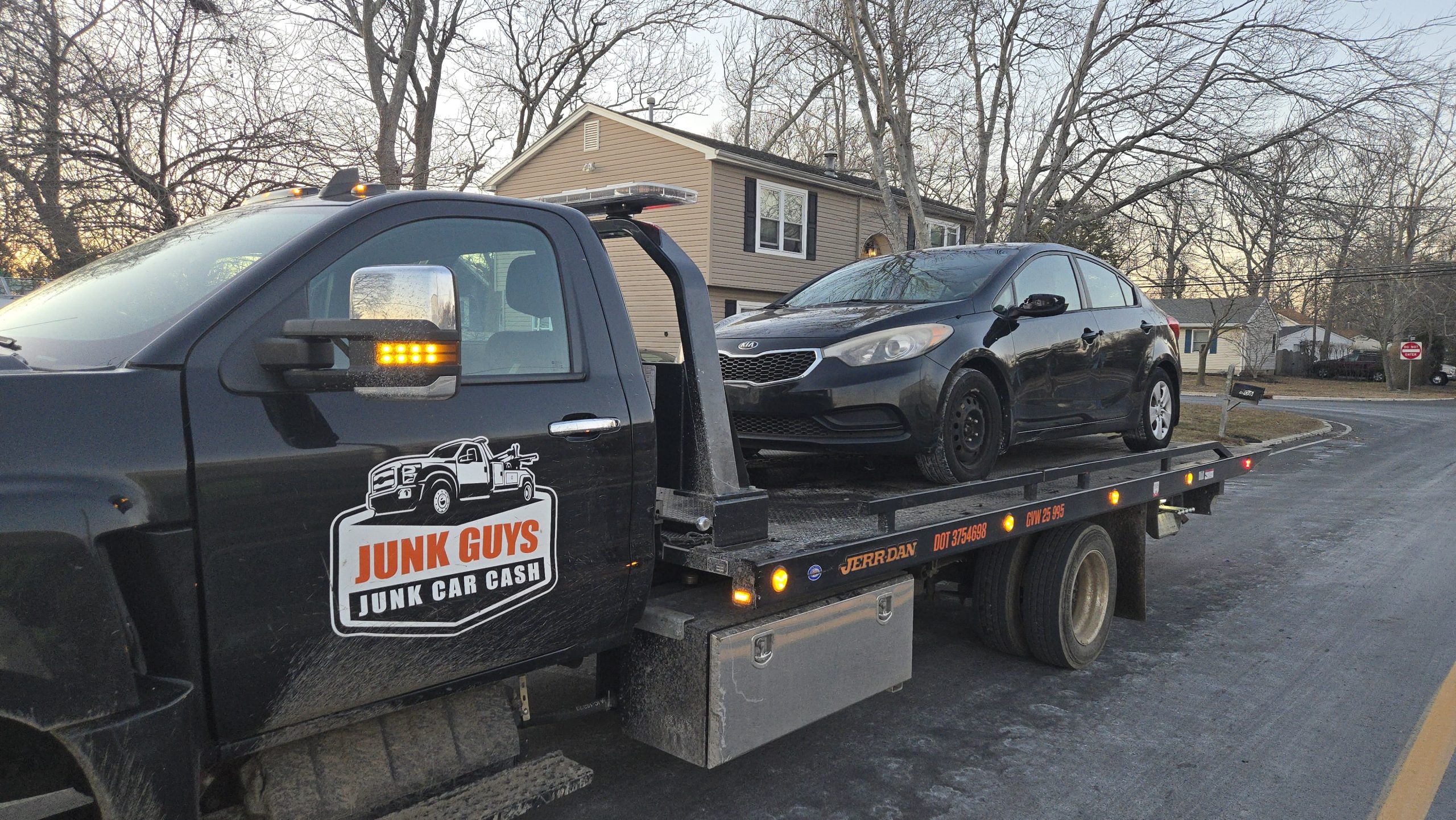
On pickup our crew will confirm the vehicle, note any visible leaks or hazards, and secure the battery and any loose parts. We stage absorbents and containment if needed. The tow truck will remain idle while we secure the load and then transport the vehicle to the recycling facility.
We cover towing for pickups, so you do not need to arrange third party transport. That keeps the chain of custody clear from your property to the recycling facility.
Read more about pickup logistics on our Tow And Pickup Logistics page and about how environmental disposal fits into the overall Cash for Cars process on our Cash for Cars service page. If you are in Farmingdale or nearby, see details at our Farmingdale location.
End of life options and scrap metal recycling
Vehicles that cannot be repaired are typically routed to scrap metal recycling where metals are separated and sent on for reprocessing. Usable parts may be salvaged and resold. Recycling reduces the need for raw materials and is the standard environmental outcome for end of life vehicles.
For more on how parts salvage affects value see our topic on Parts Salvage Value and our primer on Scrap Metal Recycling.
Key takeaway
Environmental disposal is a routine part of selling a car for cash in Wickatunk and nearby towns. We manage hazardous components, contain leaks at pickup, and deliver vehicles to authorized recycling channels so the transfer is safe and compliant. Preparing basic paperwork and noting leaks helps the process move smoothly.
Frequently asked questions
Do you remove batteries and fluids before pickup?
We secure and remove batteries when it is safe and appropriate to do so, and we contain or drain fluids when required for transport or by the receiving facility. Our crew follows local handling practices to reduce risk during loading and transport.
Will proper disposal affect how much cash I get for the car?
Yes. Vehicles that require extra handling because of leaks or hazardous components can affect the final offer. We explain any adjustments before you accept an offer so you know how environmental handling influenced the number.
What if I do not have a title or complete paperwork?
We buy vehicles in many situations that lack a title, but transfer rules vary. See our Title And Paperwork page for documentation guidance and bring any ownership records you have when possible.
Who pays for cleanup if the vehicle has already leaked onto my property?
Cleanup responsibility depends on the cause and timing of the leak. If the vehicle leaks before pickup, containment at pickup is our responsibility during transport. Remediation of historical contamination may require a separate cleanup contractor or guidance from local authorities.
How quickly can you pick up a leaking vehicle?
We provide same day pickups when scheduling allows and when it is safe to do so. We stage containment and transport equipment to limit environmental impact while the vehicle is moved to an authorized facility.
Learn more and check our local information
Read customer reviews and directions on our Google Business Profile, and learn more about our environmental disposal practices and related topics on this site.