Ask how parts salvage value is calculated and which components add the most cash. We recommend getting clear answers to those points before you start a cash for junk cars transaction so you can compare offers and avoid surprises.
Why parts salvage value matters when you sell a junk car
Parts salvage value is the portion of a vehicle's worth that comes from reusable or recyclable components, not the whole vehicle as a unit. For many older, damaged, or nonrunning cars, parts such as engines, transmissions, catalytic converters, body panels, wheels, and electronics account for most of the cash a buyer will pay.
Understanding parts salvage value helps you do two things. First, it lets you judge whether an offer reflects the real value the buyer will recover. Second, it tells you what to mention about the vehicle to get the best offer, such as recent repairs, parts that still run, or missing components.
For background on the junkyard concept and how yards handle parts and scrap, see the general definition on Wikipedia: https://en.wikipedia.org/wiki/Junkyard.
Key questions to ask before you accept a cash for junk cars offer
Start with these direct questions. They focus on parts salvage value and give you the facts you need to compare buyers.
- How do you calculate parts salvage value. Ask whether the buyer prices parts individually, uses a formula based on weight and condition, or combines parts and scrap metal into a single offer.
- Which parts add the most to the offer. Name the vehicle and ask about high value parts like the catalytic converter, engine, transmission, airbags, and electronic modules.
- Do you pay extra for OEM parts or low mileage components. If your car has low mileage parts or recent replacement components, tell the buyer and ask if they pay a premium.
- How do you handle missing or damaged components. Ask whether missing parts lower the offer and how damage to parts is factored in.
- Will you inspect on site or rely on my description and photos. On site inspections let buyers confirm condition. Remote offers are faster but can change after inspection.
- How is towing and removal handled. Confirm whether towing is free, whether removal affects the valuation, and whether they charge if the vehicle is in a tight spot.
- What paperwork do you need to complete the sale. Clearance rules can vary by town. Ask which documents they require and whether they accept cars without a title.
- How and when do you pay for the vehicle. Ask who pays on site, what form the payment takes, and whether payment timing depends on title checks or transfer steps.
How parts condition and vehicle details affect salvage value
Not all parts are equal. Two identical vehicles can have very different salvage values depending on a few practical details.
- Age and mileage: Low mileage engines and transmissions are worth more. High wear reduces value even if the part looks intact.
- Rust and corrosion: Severe rust on structural parts or electronics can make components unsellable.
- Completeness: Paired systems, like a complete dash or wiring harness, usually command higher prices than single pieces.
- Aftermarket versus OEM: Original equipment manufacturer parts are often more valuable to rebuilders than aftermarket replacements.
- Catalytic converters: These can be worth a significant portion of the salvage price, depending on the model and market.
- Title and history: A clean title and clear ownership reduce paperwork friction and can increase the effective cash you receive.
What we look for when assessing parts salvage value at Junk Guys Junk Car Cash
We take a hands on approach when we value parts, and we explain our process so sellers know what to expect.
- Vehicle details. We ask for year, make, model, trim, engine size, transmission type, and odometer reading.
- Key parts and condition. We ask you to point out or photograph high value parts such as the engine, transmission, catalytic converter, airbags, and infotainment modules.
- Damage and missing pieces. We note collision damage, flood exposure, and any missing parts that reduce resale value.
- On site verification. Our local team prefers a short on site inspection so our offer reflects the actual parts we can salvage.
- Local market pricing. We use current local demand for parts in Monmouth, Ocean, and Burlington counties to refine offers rather than national averages.
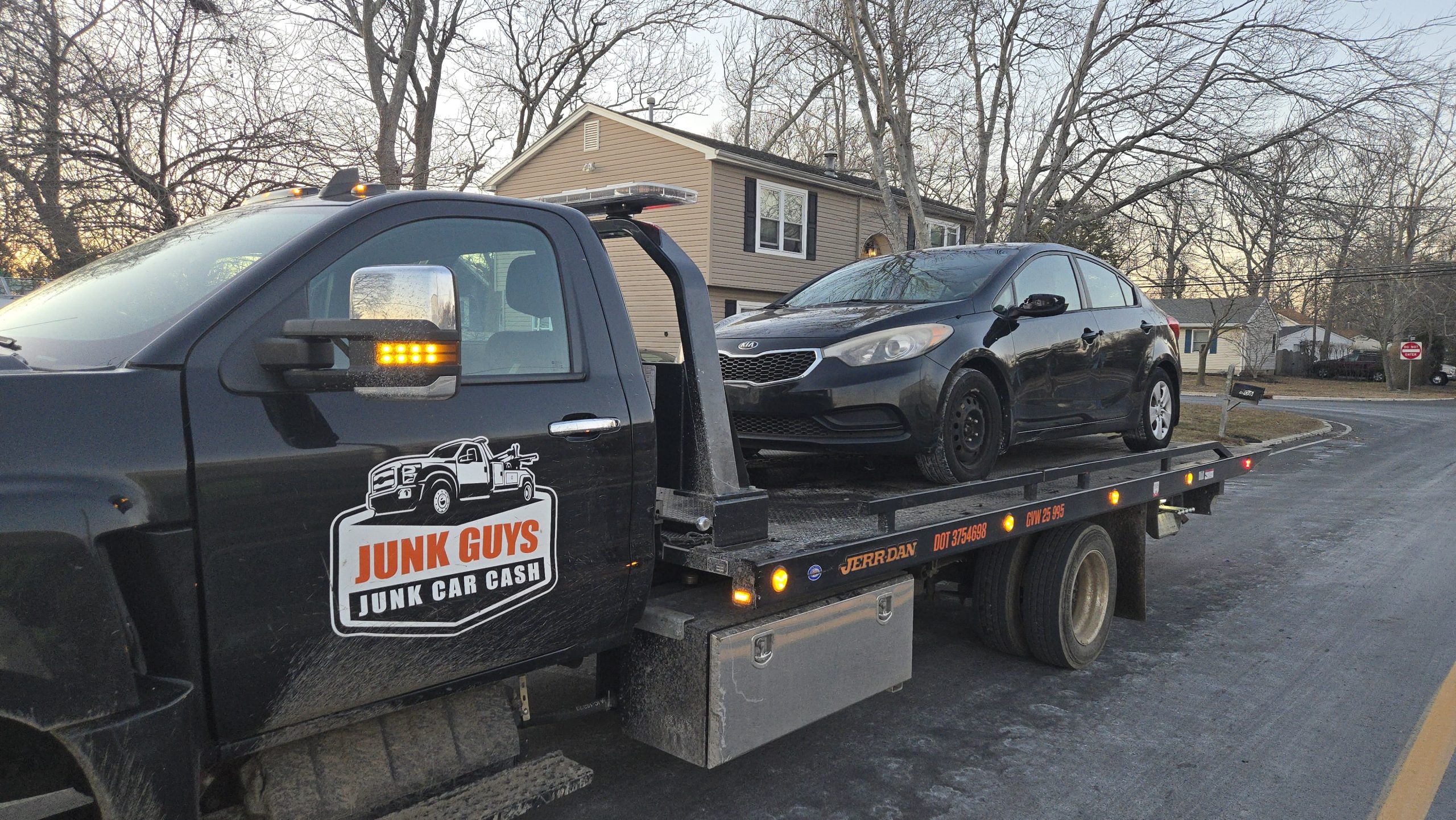
Because we provide cash offers from a live representative and handle free towing, our approach aims to make the value clear before we remove the vehicle.
Quick checklist to have before you call a buyer
- Vehicle year, make, model, trim and odometer reading
- Photos of the engine bay, dashboard, exterior damage, and catalytic converter area
- Notes on recent repairs or replaced parts
- Title or any ownership paperwork available
- Known issues like flood damage, fire damage, or seized engine
Pro tip: Mention recent part replacements, like a new alternator or recently replaced brakes, when you describe the car. Replacements can raise the cash offer because buyers value serviceable components.
Watch out: If a buyer gives an unusually high remote offer without inspecting the car, the number often drops after they see the vehicle. Always ask whether the offer is final after inspection.
Common misconceptions about parts salvage value
We hear the same misunderstandings from sellers. Clearing them up helps you get a fair deal.
- Misconception: The weight of the whole car is the main source of value. In many cases, individual parts and high value items determine the final cash offer.
- Misconception: Any buyer will pay the same for parts. Different buyers focus on different channels, such as rebuilders, exporters, or scrap processors, which changes what they pay.
- Misconception: A title is always required. Some buyers, including us, can accept vehicles without a title depending on local rules and the paperwork you can supply.
How to compare offers fairly
When you have multiple offers, use a simple checklist to compare them based on parts value rather than the headline number.
- Ask for a breakdown showing parts value versus scrap metal value.
- Check whether towing is included and whether removal time affects the cash.
- Confirm if the offer is conditional on a physical inspection and how much it may change afterwards.
- Consider the buyer s local reach. Buyers with local parts networks may pay more for specific components that sell quickly in Monmouth and Ocean counties.
Key takeaway
Ask specific, measurable questions about how parts salvage value is calculated and which components drive the offer. Have vehicle details and photos ready, and compare not just the headline price but the parts breakdown, towing terms, and inspection conditions.
Frequently asked questions
Which parts usually make the biggest difference to salvage value?
Engines, transmissions, catalytic converters, airbags, and electrical modules typically make the largest contributions to salvage value. Trim level and low mileage examples increase the value of these parts.
Can I increase the salvage value before selling the car?
Mostly you can increase value by documenting recent repairs or replacements and by preserving intact high value parts. Do not remove major components unless you plan to sell them separately to a reputable buyer. We handle removal and will factor intact parts into our offer.
Do you accept cars without titles and how does that affect parts value?
We do accept some vehicles without a title. Missing titles can reduce the pool of buyers for whole cars, but parts still retain value. Tell us up front about the title status so we can give an accurate offer and explain the paperwork we need.
How soon does a parts based offer change after inspection?
Remote offers can change after an on site inspection if the buyer finds missing, damaged, or nonfunctional components. Our on site reviews are brief so the offer is accurate before removal.
How do local market prices affect the amount I get?
Local demand in Monmouth, Ocean, and Burlington counties affects what buyers will pay for specific parts. A part that is in demand locally for rebuilds or repairs will raise the offer compared with a part that must be shipped to a distant market.
Where to read reviews and learn more
Check our Google Business Profile to read customer reviews and get directions. To learn more about how we value parts, see our topic page on parts salvage value, our service page for cash for cars, and our Farmingdale location page for local details.
View our Farmingdale location page for service area and details