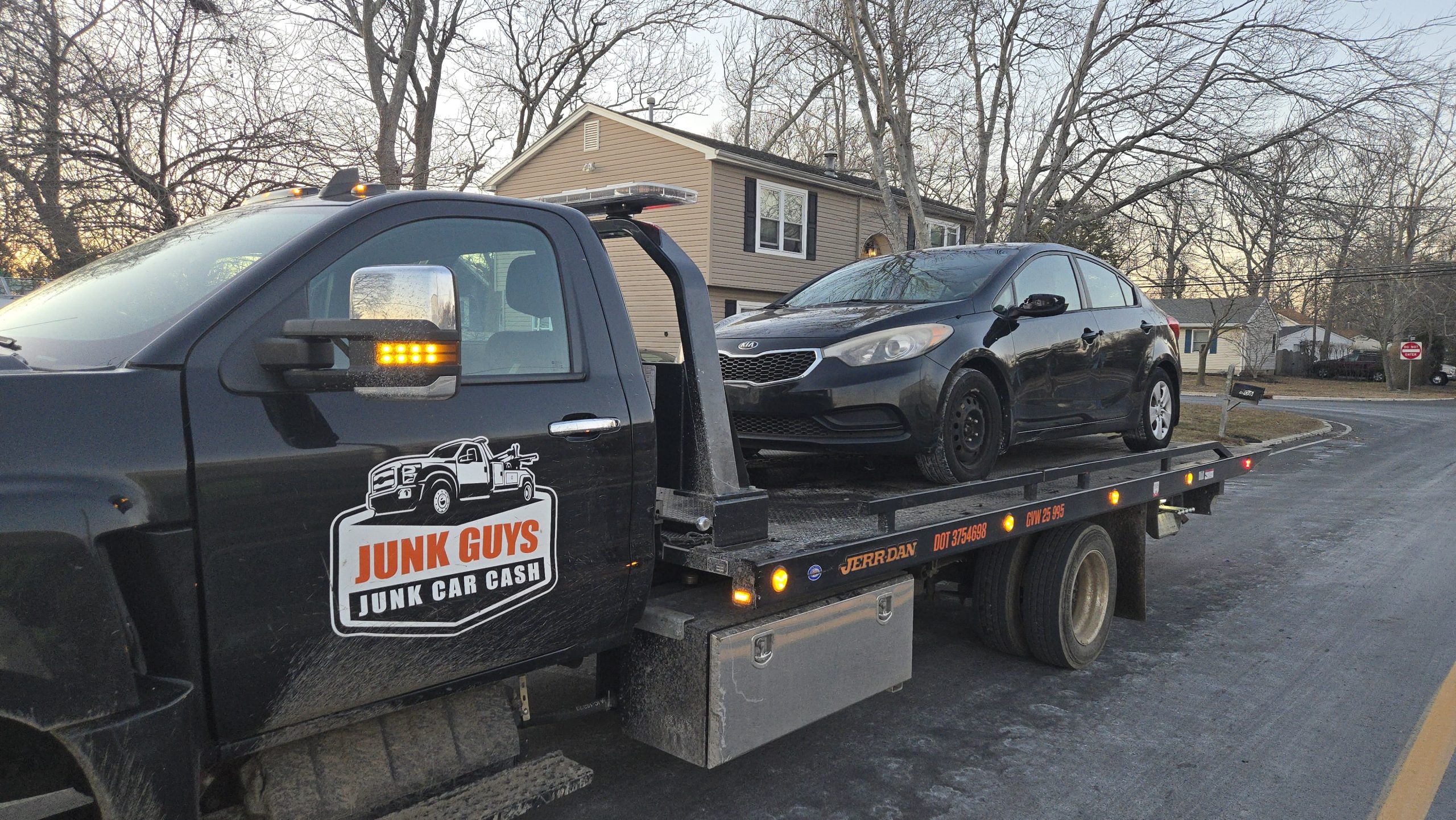
We protect property during junk car removal by assessing the site, choosing the tow method that avoids damage, stabilizing and securing the vehicle, protecting surfaces with boards or pads when needed, and performing a tidy cleanup after the truck leaves.
What tow safety for property means
Tow safety for property describes the steps we take to remove a vehicle without harming driveways, lawns, curbs, fences, or underground utilities. For you, it means the tow does not leave gouges, ruts, or scattered debris on your lot, and the vehicle is handled in a way that reduces risk to nearby structures.
Why this matters in East Freehold and nearby towns
East Freehold and surrounding communities like Freehold, Howell, and Toms River have many older neighborhoods with narrow driveways, shallow soil, and decorative hardscaping. A standard tow for a junk car can damage those surfaces if the crew does not adapt the operation to the site. That damage creates extra repair costs and delays, so avoiding it is a priority for property owners, HOAs, and property managers.
Key concepts we use to protect property
- Site assessment: We evaluate driveway width, surface type, slope, obstacles, and vehicle position before choosing equipment.
- Tow method selection: Flatbed, wheel lift, or winch methods are chosen to match the site and condition of the car.
- Load control: Securing the vehicle with soft straps and using low angle approaches keeps tension off curbs and pavement.
- Surface protection: Temporary boards, rubber pads, or track plates protect asphalt, pavers, and grass from concentrated weight.
- Traffic and pedestrian safety: We plan the approach and place cones or signs when the removal affects sidewalks or shared lanes.
- Post tow cleanup: Sweeping debris, checking for fluid leaks, and replacing disturbed items restores the site after the pickup.
How we decide which tow method to use
Choosing the right tow method is the core of property protection. We look at the vehicle condition, how it sits on the property, and the surfaces the truck will cross. Below is a quick comparison of common methods and when we use each one.
| Tow method | When we use it |
|---|---|
| Flatbed | Preferred for vehicles parked on delicate surfaces, on slopes, or when a winch will avoid wheel contact with curbs. A flatbed keeps weight distributed and reduces scrubbing or dragging. |
| Wheel lift | Used for straightforward curbside pickups on standard driveways when wheels and suspension are intact. Faster loading but concentrates weight on small contact points, so we only use it on sturdy surfaces. |
| Winch and roll | Best when a vehicle is off the driveway, in soft ground, or needs to be pulled onto a flatbed without driving it. We use boards or temporary ramps to protect turf and pavers during winching. |
Our step by step process for safe property tows
- Initial call and live assessment. When you contact us, a live representative asks targeted questions about vehicle location, surface type, and access so we can prepare the right truck and gear.
- On site inspection. Our crew confirms the conditions, checks for obstacles like planters or low branches, and reviews the best access route to the vehicle.
- Choose the tow method and protection plan. We pick a method that minimizes movement across delicate surfaces and stage boards, pads, or plates where needed.
- Secure the vehicle and control movement. We use soft straps, chocks, and low angle approaches to keep the pull controlled and predictable.
- Perform the tow with safety checks. We monitor tension, watch for shifting loads, and adjust as needed to protect the site.
- Cleanup and final walk through. After the vehicle is removed we sweep, pick up debris, and inspect the area with you when possible.
Pre tow checklist for property owners
What to have ready before pickup
- Clear the access route of toys, furniture, and movable planters.
- Mark or point out buried irrigation lines or septic risers to our crew.
- Remove loose debris from driveways and lawn areas near the vehicle.
- Tell us about surface materials, for example poured concrete, asphalt, gravel, pavers, or turf.
- Have title or paperwork ready when applicable so payment and release steps go smoothly.
Pro tip: If your driveway has pavers or a gravel apron, ask us to stage wooden boards or steel plates. That small step often saves a lot of repair work later.
Common property issues we encounter and how we handle them
- Soft ground and turf rutting. We spread loads with boards and avoid tight turns during the pull out.
- Narrow driveways and obstructions. We bring smaller equipment or use a winch to avoid moving heavy trucks over sensitive surfaces.
- Vehicles partially off paved areas. We rig a controlled winch operation and place track plates to create a temporary load path.
- Shared driveways and HOA rules. We coordinate timing and placement to respect neighbors and minimize disruption.
Pros and cons of common approaches
Pros
- Flatbed loading reduces surface contact and scrubbing.
- Winching allows pickups from awkward positions without driving on lawns.
- Surface protection prevents concentrated pressure damage.
Cons
- Additional protection materials add setup time to the job.
- Some methods require more space for the tow truck to position.
- Very steep or narrow sites may need specialized equipment that takes longer to mobilize.
Related services we provide
We perform junk car removal across Monmouth, Ocean and Burlington counties and we also offer cash for cars, cash for junk cars, and junk car buying services. Learn more about how our pickup process ties into selling your vehicle on our Junk Car Removal page Junk Car Removal and how to prepare by visiting our Preparing For Pickup guide Preparing For Pickup.
Related locations we serve
We operate from Farmingdale and cover nearby neighborhoods along the Jersey Shore and inland towns. If you are in or near Freehold, our local crew knows the roads, driveway styles, and HOA patterns that affect a safe tow. See our Freehold location page for local details Freehold New Jersey.
Watch out: Do not have neighbors or untrained helpers move or push a disabled vehicle. Uncontrolled movement increases the risk of surface damage and personal injury.
Helpful resources and what to expect next
When you call Junk Guys Junk Car Cash we provide a live representative who confirms the access details and the likely tow plan. That lets us arrive with the right truck and protection materials, which shortens the on site time and lowers the chance of property impact. For questions about paperwork, valuation, and title requirements see our topics on Tow Safety For Property and the service details on Cash for Cars.
Key takeaway
Protecting property during junk car removal is a planning problem. With a site check, the right tow method, surface protection, and a careful crew you can remove an unwanted vehicle without creating new repair bills.
Frequently asked questions
Will a tow truck damage my driveway?
We avoid damage by choosing the correct tow method and staging protective materials when needed. On older or fragile surfaces we prefer flatbeds and load using boards or plates to spread the trucks weight.
Do you need room to park a tow truck?
Yes, we need access space for the truck and to safely position our equipment. If access is tight we will plan a winch operation that minimizes truck movement across vulnerable areas.
Can you remove a car that is partially on the lawn?
Yes, we often remove vehicles on lawns using winches and temporary track plates or boards to prevent rutting. Tell our representative about the position so we can bring the right gear.
What should I do about irrigation lines or underground utilities?
Mark or tell us where irrigation heads, septic lids, or other shallow utilities are located. We will route our equipment to avoid concentrated loads over those points.
Do you pay cash on site and handle towing?
We pay cash on site for qualifying vehicles and provide free towing as part of our junk car removal and cash for cars services. Our team handles pickup and paperwork to make the process straightforward.
Learn more and check our local reputation
Read recent customer reviews and get directions on our Google Business Profile, then explore related topics and services on this site for more detail.