Tow and pickup logistics matter because they determine how quickly and safely a junk car is removed, how much property preparation is required, and whether the removal follows local rules and environmental best practices.
What we mean by tow and pickup logistics
Tow and pickup logistics is the plan and the equipment used to move a vehicle from where it sits to a processing facility or scrap yard. It covers the tow truck type, access and parking at the pickup site, loading method, vehicle condition handling, paperwork flow at the time of pickup, and how we protect your driveway or lot while we work.
At Junk Guys Junk Car Cash we coordinate these details from our base in Farmingdale, New Jersey. Our local team decides whether a car needs a flatbed, a wheel lift, or light winching, and we schedule the pickup to fit neighborhood limits and homeowner needs. We include free towing with our junk car removal service, and we handle title questions and on site payment when the vehicle qualifies for immediate cash.
Why logistics matter for homeowners and property managers in Farmingdale and the Jersey Shore
Tow and pickup logistics matter for four practical reasons that people in Farmingdale, Asbury Park, Belmar and surrounding towns notice right away:
- Safety: Improper hooking or unstable loading can damage a vehicle, a driveway, or nearby structures. We follow safe loading practices to avoid property damage.
- Timing and convenience: The right truck and the right plan let us finish a pickup in one visit, often same day, and minimize disruption for you and your neighbors.
- Property protection: Driveways, lawns and shared parking require care. Our crews stage equipment to avoid scraping curbs or tearing turf.
- Legal and environmental compliance: Local ordinances, salvage title rules and state requirements for abandoned vehicles affect where and how a car moves. Planning avoids delays or fines.
Those concerns are why logistics are not an extra step. They are the core of a smooth Junk Car Removal job.
Key concepts and terms to understand
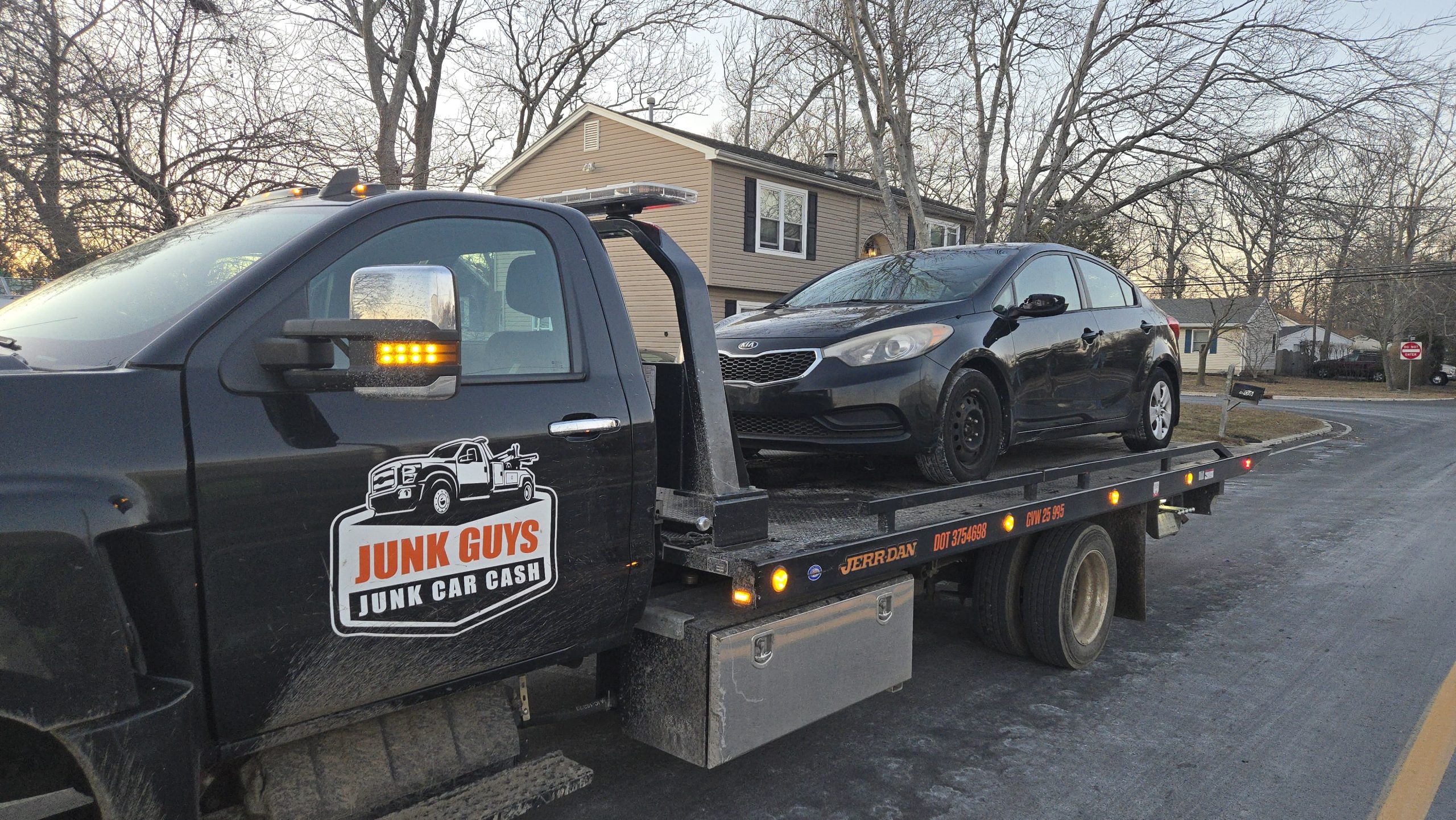
- Flatbed towing. A truck with a bed that tilts and slides so the vehicle rides fully on the bed. Preferred for non running cars that need minimal further damage.
- Wheel lift towing. A method that lifts the front or rear wheels. Faster for short moves but not ideal for badly damaged vehicles.
- Winching. Using a cable to pull a vehicle onto a bed when it cannot roll under its own power.
- Access and staging. Where a truck can park, what turning room exists, and whether neighborhood rules allow temporary double parking.
- Title and release paperwork. Documents that must accompany the vehicle at pickup, or a signed release if there is no title. We explain options when titles are missing.
- On site payment and chain of custody. How ownership transfers at pickup, and how we document the handoff for your records.
How logistics affect different situations
Running cars versus non running cars
Running vehicles are usually quicker to load and may be moved with a wheel lift when access is tight. Non running cars often need a flatbed and winching. We choose the method that limits towing stress and reduces the chance of further mechanical damage.
Private driveways, HOAs and commercial lots
HOAs and municipal lots have specific parking rules and access constraints. We plan routes and time windows to respect local ordinances and to avoid blocking emergency lanes or interfering with weekly pickup schedules in neighborhoods such as Brick and Toms River.
Vehicles without a title
If you do not have a title, we follow our documented process for ownership verification and a bill of sale. That process affects timing, so planning the pickup logistics with paperwork in hand avoids delays.
Comparison of common towing options
| Tow method | When we use it | What to expect |
|---|---|---|
| Flatbed | Cars that do not run, severely damaged, or when driveway protection is needed | Vehicle rides on the bed, lower risk of further damage, requires room for the truck to position |
| Wheel lift | Running cars that can be lifted by front or rear wheels, tight access situations | Faster hookups, less space needed, not ideal for heavy front end damage |
| Light winch assist | Stuck cars, vehicles in soft ground, or rolled vehicles | Winching onto a flatbed, needs firm truck placement and careful staging |
Checklist to prepare a vehicle and site for pickup
Pre pickup checklist
- Clear a path to the vehicle and move small obstacles from driveways or yards.
- Confirm parking restrictions or HOA rules and tell neighbors if a truck will be parked temporarily.
- Gather title, registration, or signed release documents if the title is missing.
- Remove personal items from the vehicle and disable alarms to prevent interruptions during loading.
- Make a note of soft surfaces like newly sodded lawn or gravel that could be affected by heavy equipment.
How we plan a pickup, step by step
- Site assessment. We check access, curb width, overhead clearances and where the truck can safely park.
- Truck selection. Based on the assessment we assign a flatbed or wheel lift and any winching gear that may be needed.
- Scheduling. We set a pickup window that fits local rules and minimizes disruption for neighbors.
- Paperwork verification. We confirm ownership documents and prepare the bill of sale or title transfer paperwork at pickup.
- Property protection. We stage boards or mats when needed to protect asphalt or soft ground, and we wear gloves and boot covers to reduce scuffing.
- Loading and documentation. We secure the vehicle, complete paperwork, and provide you a receipt or confirmation of removal.
Pro tip: Photograph the vehicle in place and the parking area before pickup. That helps if there are later questions about pre existing damage or the condition of your property.
Common questions about tow logistics and what to expect
- How long will the tow take at my property? Small, straightforward jobs are often done in 20 to 45 minutes from arrival to departure. Complex winching or tight access can take longer.
- Will my driveway get damaged? We plan equipment placement and use protective mats when needed. If hardscape is compromised, we document the site and address the issue as part of our standard pickup process.
- Do you handle titles at pickup? Yes, we complete title transfer or accept signed releases when allowed. That paperwork is part of our Junk Car Removal service and speeds the payment and removal process.
- Are there local rules that affect pickup times? Yes. Municipal ordinances and HOA rules can restrict parking and truck staging in some neighborhoods. We account for those rules when we plan a pickup in Monmouth, Ocean and Burlington counties.
Related services and next steps
Logistics are tightly connected to the services you might need next. For example, understanding valuation helps determine whether a car is worth on the spot cash or should go straight to parts salvage. Read about how we value vehicles on our Vehicle Valuation Factors page.
When you are ready to schedule removal as part of selling a car, our Junk Car Removal service page explains what paperwork to have handy and what to expect on pickup day.
Where we operate and why local knowledge matters
We are based in Farmingdale, New Jersey, and we serve communities along the Jersey Shore and inland towns across Monmouth, Ocean and Burlington counties. Local knowledge matters because street widths, curb rules, and municipal towing ordinances vary between Asbury Park and inland towns like Howell or Marlboro. We use that knowledge to pick the right truck and the best time to arrive.
Learn more about pickups specific to our base by visiting our Farmingdale location page at Farmingdale, New Jersey.
Key takeaway
Tow and pickup logistics are the difference between a quick, safe removal and a day of delays or property headaches. Planning the right truck, accounting for access and paperwork, and protecting your property are the things we control to make a removal straightforward for homeowners, property managers and small businesses in Farmingdale and nearby towns.
Frequently asked questions
What if my car will not start, can you still remove it?
Yes. Non running cars are common. We typically use a flatbed and winching to load cars that will not roll. That choice affects arrival time and the space the truck needs on site.
Do you need the vehicle title at pickup?
Having the title makes the transfer faster. If you do not have a title, we accept signed releases and other ownership documentation in many cases. We explain the acceptable options when you set up pickup.
Will you pay me on site?
For qualifying vehicles we provide on site cash payments as part of our buyer process. We also document the sale and provide receipts so you have a record of the transaction and transfer of ownership.
How do you protect my driveway during towing?
We stage equipment to avoid concentrated loads, use boards or mats where needed, and choose a towing method that reduces movement over the surface. If special protection is required, we note that during the site assessment.
Are there limits because of local ordinances?
Yes. Some towns have parking or staging restrictions that affect when and where a tow truck can park. We take those rules into account when planning pickups in Monmouth, Ocean and Burlington counties.
Where to learn more and check our local presence
To see reviews, get directions, or confirm our local hours and service area, check our Google Business Profile. For details about how we handle pickups and logistics across our service area, see our Tow And Pickup Logistics topic page and our Farmingdale location page.