Ask these five questions before you accept payment: who pays on site, what payment methods are used, when you receive funds, what paperwork proves the sale, and how the buyer verifies identity and title. We answer each clearly from the seller perspective and explain what safe payment looks like in Colts Neck.
What payment security means for cash for cars
Payment security covers the method used to transfer money, proof of payment, how identity and title are verified, and safeguards against scams or bounced checks. For a transaction to be secure, you need clear, verifiable payment and documentation you or a municipal office can rely on.
At Junk Guys Junk Car Cash we provide on the spot cash payments for qualifying running vehicles and work through secure alternatives when immediate cash is not appropriate. We also provide a written receipt and handle the paperwork wherever state rules require it.
Why payment security matters in Colts Neck and nearby communities
Local transactions bring benefits and local risks. You may be selling from a private driveway in Colts Neck, a rental property in Howell, or a lot in Toms River. In every case, you need to know the payment is final and that the sale clears title and liability for you.
Payment problems can leave you liable for parking tickets, tolls, or future ownership disputes. Because we operate from Farmingdale and serve Monmouth County towns including Colts Neck, we see the common local issues and handle them day to day.
Key payment security concepts to understand
- Immediate funds versus conditional payment. Cash on the spot is final immediately. Certified checks and bank transfers can take time to clear, and personal checks can bounce.
- Proof of sale. A written receipt or bill of sale that records the vehicle identification number, sale amount, date, and signatures protects you.
- Title transfer rules. New Jersey Motor Vehicle Commission requirements determine whether you must sign over a title, provide a bill of sale, or complete additional forms.
- Identity verification. Confirming the buyer is a registered business and has local references reduces risk.
- Escrow and conditional holdbacks. Some buyers try to delay payment pending inspection or parts removal. Understand any conditions before you let the vehicle go.
Five essential questions to ask a buyer before accepting payment
Ask these directly and get answers you can document.
- Who will pay me and how? Get the buyer business name and whether they will pay in cash, certified check, or electronic transfer. We offer on the spot cash for qualifying vehicles and provide alternative secure methods when cash is not appropriate.
- When will I receive cleared funds? If payment is not cash, ask how long the hold will be. Certified bank checks and ACH transfers can take a business day or more to fully clear.
- What paperwork will I get? Confirm you will receive a written receipt, a signed bill of sale, and any state forms needed for title transfer. We provide the paperwork required under New Jersey rules and will link you to resources for title questions such as the New Jersey Motor Vehicle Commission guidance.
- Is payment contingent on inspection or towing? Some offers are conditional. If payment is contingent, get the conditions in writing and a timeline for completion.
- How does the buyer verify my identity and the vehicle? Ask what they will record, such as a copy of your ID, the vehicle identification number, mileage, and any photos. A reputable buyer documents the vehicle and the seller to create a reliable record.
How to evaluate payment methods
| Payment method | What to watch for |
|---|---|
| Cash on the spot | Immediate and final, but count bills in front of the buyer and get a signed receipt. This is how we pay for good running vehicles when conditions allow. |
| Certified or bank check | Safer than a personal check, but verify the issuing bank and wait for the check to clear before releasing the vehicle or title. |
| Electronic bank transfer | Fast and traceable once cleared. Confirm the transfer has settled in your account; do not hand over a vehicle on the basis of a pending transfer. |
| Cashier payment held by third party or escrow | Only use reputable escrow services and verify fees and timelines before agreeing. Avoid unfamiliar escrow schemes tied to Craigslist or social media leads. |
Red flags and common payment scams
- Buyers who insist on releasing the vehicle before funds clear.
- Requests to accept unusual payment forms, like gift cards or cryptocurrency, for a vehicle sale.
- Buyers who pressure you to sign over the title before you have proof of payment.
- Offers that are dramatically higher than local market value with an excuse to handle payment later.
Watch out: Never relinquish the vehicle or sign transfer forms until you have clear, verifiable payment and a written receipt that matches the sale terms.
Paperwork and title steps to protect yourself
Paperwork is the legal record of the sale. New Jersey has specific title transfer and bill of sale requirements. Before you agree to a payment method, confirm which forms the buyer will complete and what you must keep for your records.
For a deeper look at state requirements, review the New Jersey Motor Vehicle Commission title guidance and our pages about title and paperwork and vehicle valuation factors.
How Junk Guys Junk Car Cash handles payment security
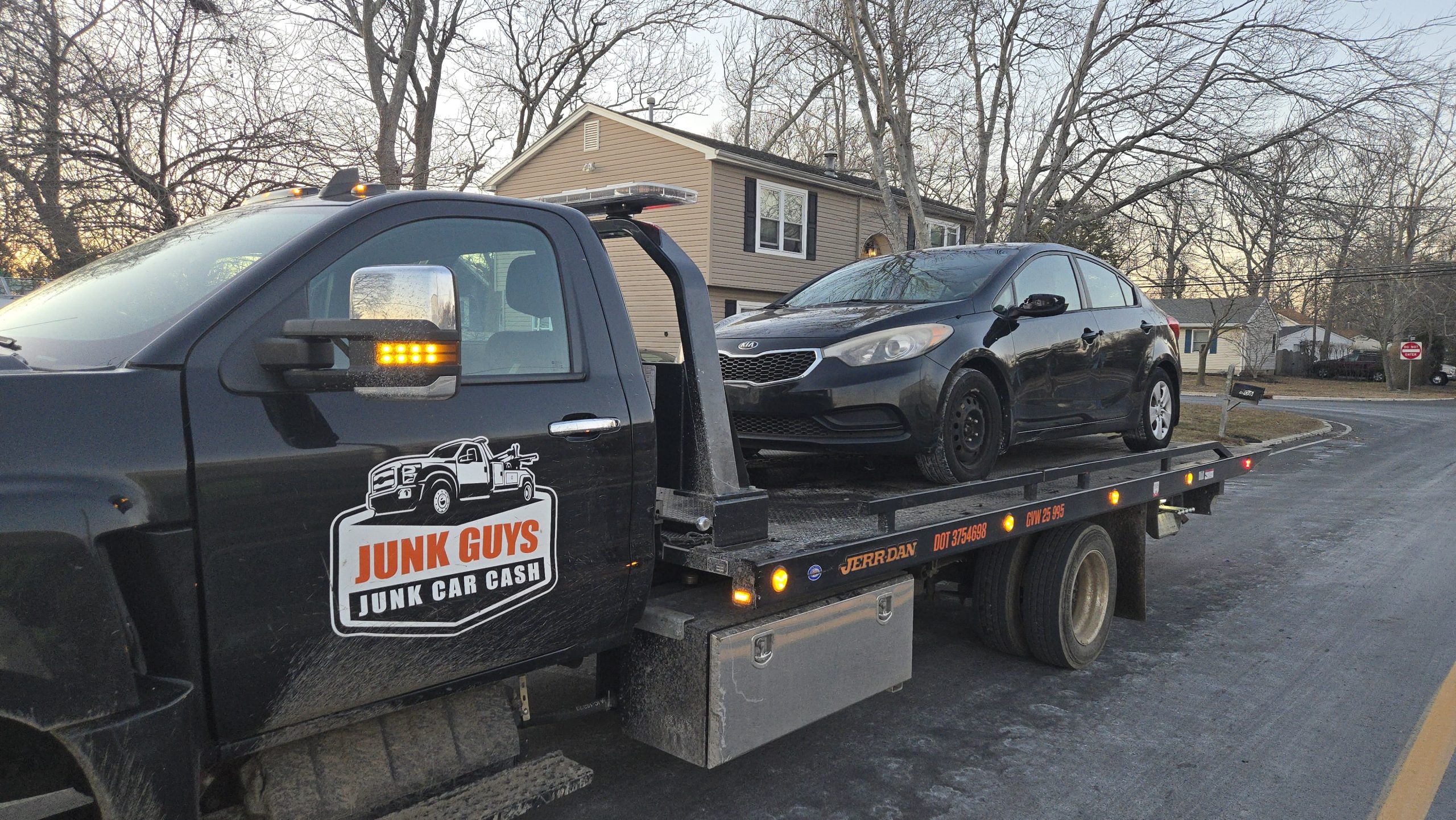
We provide live offers from a team member rather than automated quotes, and we pay on the spot in cash for qualifying running vehicles. For vehicles that require further inspection or for transactions that are not paid in cash, we use secure, documented alternatives agreed with the seller in advance.
When we collect a vehicle, we provide a receipt that records the sale amount, the vehicle identification number, the date, and signatures. That receipt is the primary proof you keep for your records and for New Jersey Motor Vehicle Commission purposes.
Pro tip: Ask the buyer to print the receipt on company letterhead or include the company name and registration information so you can verify the buyer later if needed.
Checklist before you hand over your car
Safe sale checklist
- Confirm buyer business name and local address or service area.
- Agree on payment method and whether funds are immediate.
- Receive a written receipt or bill of sale that lists VIN, sale amount, date, and signatures.
- Keep a copy of any title transfer forms you sign.
- Verify funds have cleared before releasing the vehicle or keys, unless you accept on the spot cash.
Related services that affect payment and logistics
Payment security interacts with other parts of the sale process. If a buyer will tow the vehicle, check their pickup policies and whether payment is paid before or after tow. See our page on Junk Car Removal for pickup details and our Cash for Cars service page for how we handle on the spot payments.
Related locations and local context
We operate from Farmingdale and serve Monmouth, Ocean and Burlington counties, including nearby towns and shore communities. If you are in Colts Neck, Asbury Park, Belmar, Brick, Howell or Toms River, local title office rules and regional market values will affect how a buyer structures payment. For broader location options see our locations and service area page.
Helpful resources and authoritative references
For background on salvage yards and vehicle recycling, see the Wikipedia overview of junkyards and vehicle salvage. For state title rules, consult the New Jersey Motor Vehicle Commission title and transfer information. For industry best practices on handling transactions and documentation, the Automotive Recyclers Association provides guidance for buyers and sellers in the vehicle recycling supply chain.
Common questions people ask about payment security
We answer the follow ups we hear most often below and in the FAQ section at the end of this guide.
- Can I accept a certified check? Yes, with verification. Confirm the issuing bank and consider waiting for the check to clear before transferring title or the vehicle.
- Is a signed receipt enough to remove liability? A receipt helps, but the title transfer or state form is the definitive record in New Jersey. Keep copies of all documents and follow up with the MVC guidance if you have questions.
- What if I do not have the title? We accept vehicles without a title in many cases, but payment method and paperwork will vary. See our topic on selling without title for typical options.
Key takeaway
Key takeaway
Before you accept payment for a car, confirm who pays, how funds are delivered, when funds clear, and what paperwork you receive. Local buyers should be able to document the transaction and verify identity. We handle these details for sellers in Colts Neck and surrounding Monmouth County communities and provide on the spot cash for qualifying vehicles along with written receipts and documented transfers.
Frequently asked questions
What is the safest way to get paid when selling a car locally?
Cash on the spot is the simplest way to have final funds immediately. If you choose a certified check or electronic transfer, verify the bank, wait for funds to clear, and keep written documentation. We offer on the spot cash for qualifying vehicles and documented alternatives when cash is not appropriate.
Can I sign over the title before the buyer pays?
Do not sign over the title until you have verified payment or received immediate cash unless you have a trusted, documented agreement. In New Jersey, title transfer rules require accurate signatures and dates, so be careful. Keep copies of everything you sign and follow MVC guidance.
What should a bill of sale include?
A bill of sale should include the buyer and seller names, vehicle identification number, sale amount, date of sale, and signatures. If the buyer is a business, include their company name and registration information when possible.
What if a buyer offers more than market value and asks for payment later?
High offers with delayed payment are a common red flag. Insist on verifiable payment and documentation before you release the vehicle. If a buyer requests unusual payment terms, get everything in writing and verify the buyer independently.
Do I need to report the sale to the state?
Yes. Follow New Jersey Motor Vehicle Commission procedures for title transfer or notification so you are no longer responsible for the vehicle. Keep your copies of the bill of sale and any transfer forms for your records.
Where to learn more and verify our local reputation
Check our Google Business Profile to read customer reviews and get directions, and see related topics on this site such as Payment Security, Preparing for Pickup, and Cash for Cars for more detail.
For service area information and towns we cover, visit our locations and service area page.